CALGARY & SURROUNDING AREASLet’s talk about your vehicle
Cash For Cars Incity Towing(403) 835-7218Get a free quote
Cash For Cars Incity
Get a free quote (403) 835-7218
Home Alberta recycling rulesLICENSING AND DEPOLLUTION

Car Recycling Rules in Alberta

A licence, a trade certificate, and five things out of the car before it is crushed.

Get a free quote
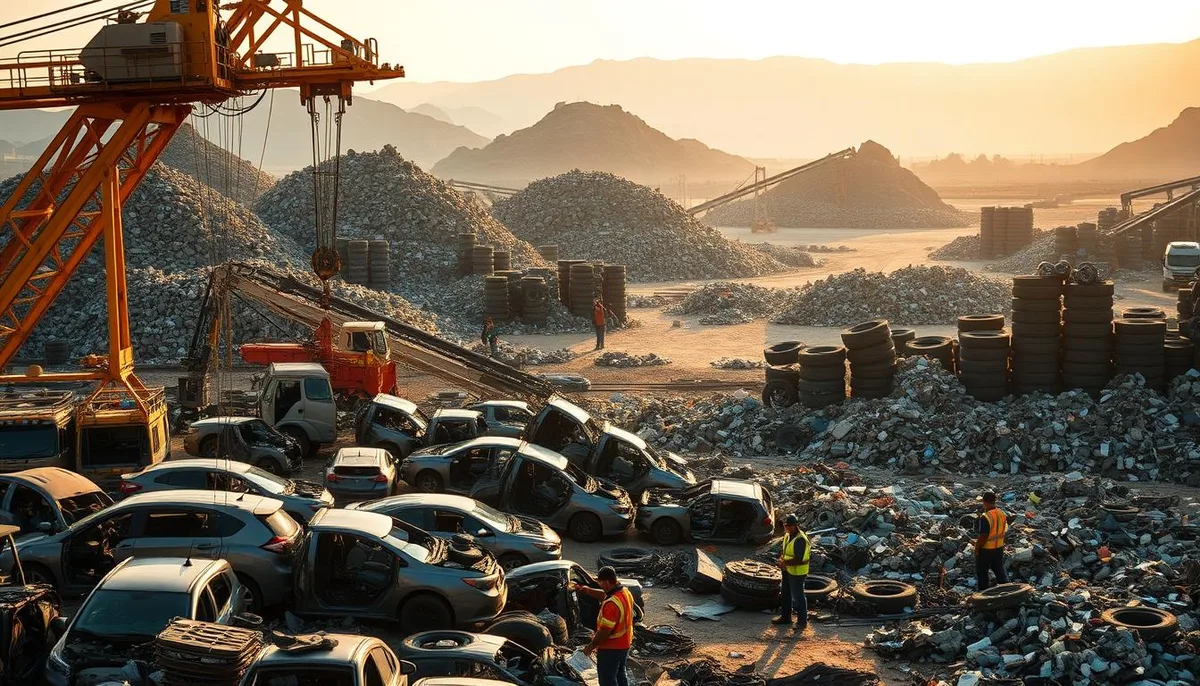
Auto recycling yard workers sorting crushed cars beside piles of scrap metal
Regulator
AMVIC — Alberta Motor Vehicle Industry Council
Environmental code
CAREC, national since 2011
THE SHORT ANSWER

Does a car wrecker need a licence in Alberta?

Yes. Automotive businesses in Alberta must hold a valid AMVIC licence, and dismantling and recycling vehicles for parts falls under the automotive repair class. Getting one means producing a trade certificate, photo identification, general liability or garage insurance, and a background check. That is the baseline before a single vehicle is taken in.

BEFORE THE CRUSH

What has to come out of a car before it is crushed?

Five categories, and they come out in order. Fluids first, then the refrigerant, then the battery, then the mercury switches, then the tyres and anything else that cannot go through a shredder. Only after that does the hulk become recoverable metal.

01Operating fluids

Engine oil, coolant, brake fluid, transmission fluid, power steering fluid, washer fluid and any remaining petrol are drained and captured before the vehicle moves to dismantling. The stage has a name — depollution — and it comes first for every end-of-life vehicle.

02Air-conditioning refrigerant

The gases in the air-conditioning system are removed by licensed technicians so that none escape to the atmosphere, then sold to a licensed buyer for reuse. A vehicle is not crushed with a charged system still in it.

03Battery

The lead-acid battery is pulled and sent into a regulated recycling stream rather than to the shredder. Lead and sulphuric acid are both handled separately from the hulk.

04Mercury switches

Manufacturers fitted mercury switches to convenience lights and ABS systems for years, and hundreds of thousands are still on the road. Switch Out is the national programme that removes them from end-of-life vehicles so the mercury never reaches the environment.

05Tyres and remaining waste

Tyres come off for their own stream, as do other materials that cannot go through a shredder. What is left after depollution and dismantling is the hulk: the chassis and body, priced as recoverable metal.

CHECKING AN OPERATOR

How do I check a recycler is licensed?

Ask to see the AMVIC licence, which licensed businesses display inside the premises, and look for the AMVIC logo in their advertising. AMVIC runs a public business and salesperson search and takes enquiries on 1-877-979-8100. An operator who will not answer the question has answered it.

Scrapping a Car in Alberta

Ask before you hand it over

These 5 questions separate a licensed recycler from a scrap hauler.

For your preparation only; these checks are not submitted.
REGULATION QUESTIONS

What else governs recycling in Alberta?

Cash For Cars Incity answers questions about its process by phone on (403) 835-7218. The 7 questions below cover AMVIC licensing, what the regulator asks for, Alberta’s vehicle statuses, the national environmental code, and why any of it affects the figure you are offered.

Call (403) 835-7218
Does a car wrecker need a licence in Alberta?

Yes. Alberta requires automotive businesses to hold a valid AMVIC licence, and dismantling and recycling vehicles for parts falls under the automotive repair licence class. AMVIC is the Alberta Motor Vehicle Industry Council, the provincial regulator for the automotive industry.

What does AMVIC require before issuing that licence?

A recycling and dismantling applicant provides a trade certificate in one of four trades — Automotive Service Technician, Heavy Equipment Technician, Auto Body Technician or Recreation Vehicle Service Technician — along with government photo identification, proof of general liability or garage insurance, and a background check completed at the applicant’s own cost.

Can a recycler sell a whole vehicle to a member of the public?

Not under the recycling and dismantling activity. That activity covers buying and dismantling wrecked, abandoned or damaged vehicles and selling the usable parts, the vehicle as a unit at wholesale, or the hulk once the usable parts are off. Selling the vehicle as a unit to a consumer sits outside it.

How do I check an operator is licensed?

Ask to see the AMVIC licence, which licensed businesses display inside the premises, and look for the AMVIC logo in their advertising. AMVIC also runs a business and salesperson search, and takes enquiries on 1-877-979-8100.

What are Alberta’s vehicle statuses?

Alberta records a status against every vehicle: active, salvage, non-repairable, unsafe and rebuilt among them. A salvage vehicle must pass an inspection at a licensed facility before it can be registered again, and its status becomes rebuilt when it does. The Vehicle Inspection Regulation holds the formal definitions.

Where does the Canadian Auto Recyclers’ Environmental Code come in?

CAREC is the national code that standardises how end-of-life vehicles are handled. It began as the code written for Environment Canada in 2008 under the Retire Your Ride programme, and was expanded to cover all end-of-life vehicles after that programme ended in March 2011.

Why does any of this affect what I am paid?

Because depollution, licensed refrigerant recovery and regulated disposal are costs an operator carries before a single part is sold. An offer well above the local range is worth asking about, because depollution and licensed disposal are where that cost would otherwise come out.

Ready to hand the vehicle over?

Send the year, make, model, condition and address for a number on your car.

MAKE ROOM FOR WHAT’S NEXT

Ready to say goodbye
to your old car?

Find out what it’s worth
Let’s talk